What Are the Downsides of Cavity Wall Insulation?
18 May 2026
What Are the Downsides of Cavity Wall Insulation? The downsides of cavity wall insulation can include moisture build-up, potential for…

No common household product truly dissolves cured spray foam insulation — once it hardens, it becomes chemically resistant and must be physically removed. Fresh, uncured foam can be wiped away with acetone or dedicated foam cleaners, but hardened foam requires professional mechanical extraction combined with specialist softening agents for safe, complete removal.
At Loft Insulation Specialists, we’re often asked by Hampshire homeowners whether there’s a simple solvent that will make unwanted spray foam disappear. It’s a fair question — and understanding the honest answer will save you a great deal of frustration. In this guide, we explain what genuinely affects spray foam, how professionals approach removing expanding foam, and the safest route to a clean, sound loft.
Spray foam insulation is a two-part polyurethane product. When the components mix, they expand and cure into a rigid or semi-rigid solid. This chemical reaction is designed to be permanent and durable — which is exactly why it clings so stubbornly to timber, brick, and roofing felt.
Once cured, the foam is largely impervious to solvents. There is no liquid you can pour on hardened foam that will melt it away cleanly. This is one of the biggest misconceptions we encounter across Southampton, Portsmouth, Basingstoke, and Winchester. The reality is that hardened foam has to be broken down and lifted away using a careful combination of techniques.
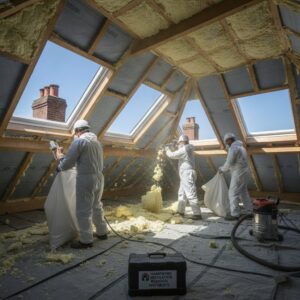
Because no single solvent dissolves cured foam, professional removal relies on a layered method. At Loft Insulation Specialists, our certified team uses a controlled combination of mechanical extraction, specialist chemical softening agents, and industrial vacuum systems. This ensures the foam is removed thoroughly without damaging the underlying roof structure.
The advantage of a professional approach is precision. Timber, rafters, and roofing membranes are fragile, and aggressive attempts to strip foam can cause lasting harm. Our qualified installers know exactly how much pressure and softening treatment each surface can safely take. For the full step-by-step extraction process, our dedicated Spray Foam Insulation Removal page covers everything from survey to completion certification.
Some people assume a strong chemical will do all the work. In practice, softening agents only make the foam more pliable so it can be scraped and vacuumed away. They don’t liquefy it. Used incorrectly, harsh chemicals can also stain timber, degrade roofing felt, or create fumes in an enclosed loft space. This is precisely why we treat removal as a skilled, safety-certified task rather than something to be rushed.
After the bulk of the foam is lifted, a thin residue often remains bonded to the surface. To clean expanding foam residue effectively, the surface first needs to be assessed for material type — treated timber, plaster, and roofing membrane all respond differently. Our technicians use fine mechanical abrasion alongside targeted cleaning products to lift residue without gouging the substrate.
The goal isn’t simply cosmetic. Leftover residue can trap moisture and interfere with new insulation sitting flush against the roofline. Properly preparing the surface is what allows a replacement product — such as Knauf Earthwool or Superfoil — to perform to its full potential for decades. As certified Superfoil installers, we make sure every surface is clean and sound before new insulation goes in.
Many older properties across Fareham, Fleet, Andover, and Havant have breathable roof structures that rely on airflow to stay dry. Foam and its residue can disrupt this balance. Removing it thoroughly and cleaning the surface correctly restores the roof’s ability to breathe, protecting your timbers from rot and your home from damp — a key part of keeping a property comfortable year-round.
Reaching for a bottle of solvent might feel like the quick fix, but cured spray foam simply won’t cooperate. Worse, the wrong chemical in a poorly ventilated loft can damage your roof and create safety hazards. Professional installation and removal consistently deliver better, safer, and longer-lasting results.
Our award-winning team — recognised as Best Loft Insulation Firm 2023 at the Southern Enterprise Awards — brings over 40 years of combined experience to every job. We’re fully qualified and insured, and we start every project with a free, no-obligation survey so you know exactly what your loft needs before any work begins.
Acetone can help soften and remove expanding foam residue while the foam is still fresh, but it has little effect once the foam has fully cured. For hardened residue, mechanical removal by trained technicians is the safe and effective solution, especially on delicate roof timbers.
No. Vinegar, WD-40, and similar household products cannot dissolve cured spray foam insulation. They may loosen very small surface spots at best, but they will not break down the polyurethane structure. Complete removal requires professional extraction methods.
Removing foam from a loft involves working at height, handling chemical softeners, and protecting fragile roof structures. For safe, thorough results that keep your property mortgage-ready and your timbers protected, we recommend a certified specialist team like ours handle the work from start to finish.
If you’re dealing with unwanted spray foam in your Hampshire property, don’t waste time and money on solvents that won’t work. Let our expert, fully insured team assess your loft and provide honest advice with clear, transparent pricing. Contact Loft Insulation Specialists today to arrange your free, no-obligation survey — and enjoy a clean, sound, energy-efficient loft that performs for years to come.
Posted by: Peter D’Auganno
Date: 17 August 2026