
Loft Boarding Installation Hampshire
Loft Boarding Installation Services in Hampshire
At Loft Insulation Specialists, we help you use the 70% of unused loft space in most homes for seasonal items, luggage, and household overflow using our raised boarding systems that work perfectly with Knauf Earthwool and Superfoil insulation. Here’s everything you need to know about installation methods, insulation protection, and regulations to make the right decision for your Hampshire property.
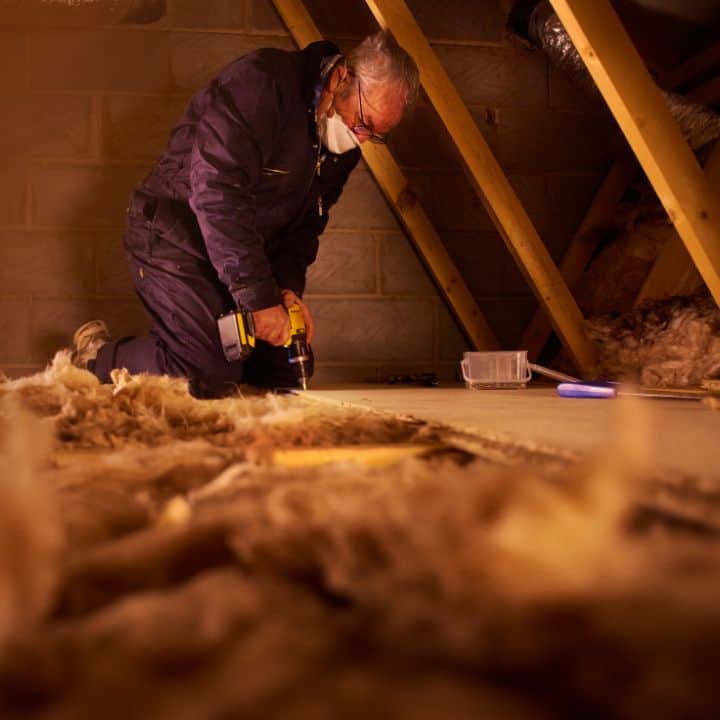
Is it a good idea to board a loft?
Boarding your loft with Loft Insulation Specialists is one of the smartest home improvements you can make – creating valuable storage while protecting your Knauf Earthwool or Superfoil insulation. Here are 5 compelling reasons why it’s the right choice for most Hampshire homes.
Creates 30–70% More Usable Storage
Transform the unused loft into practical storage for seasonal items, luggage, and household overflow. Everything stays clean, dry, and easily accessible without cluttering your bedrooms, garages, or hallways below.
Adds £2,000–£5,000 to Property Value
Estate agents confirm that a fully boarded loft raises your home’s sale price. Practical storage appeals to every buyer in Hampshire’s competitive market, backed by our professional installation documentation for future surveys.
Protects Your Insulation Investment
Our raised systems maintain the full thermal performance of Knauf Earthwool or Superfoil, because compressed insulation loses much of its effectiveness. Your energy savings continue delivering benefits for years to come.
Pays Back Faster Than Self-Storage
Monthly self-storage units cost £50–£150, which means loft boarding usually pays for itself within 1–2 years. Enjoy permanent convenience without ongoing rental fees or repeated trips to offsite facilities.
Professional Installation Minimises Risk
We complete the full service in just 1–2 days, including structural joist assessment and ventilation gap preservation to prevent condensation. You receive full warranty and certification for complete insurance and resale confidence.
Will loft boarding damage my insulation?
Loft boarding over Knauf Earthwool or Superfoil insulation won’t damage it when using our raised timber systems at Loft Insulation Specialists. Boarding out a loft over insulation compresses material if you lay boards directly on top. This compression reduces thermal performance and wastes the money you spent on insulation. Boarding a loft with loft insulation underneath needs at least 50mm between boards and insulation surface, the clearance NHBC requires under walkways in new homes.
Our customers often ask about this insulation protection issue. Boarding a loft with Knauf Earthwool or Superfoil insulation requires careful planning around pipes, cables, and ventilation gaps. We leave access hatches over water tanks and junction boxes. We keep the insulation at full depth under any boarding system, with an air gap above it that stays open at the eaves on opposite sides of the loft.
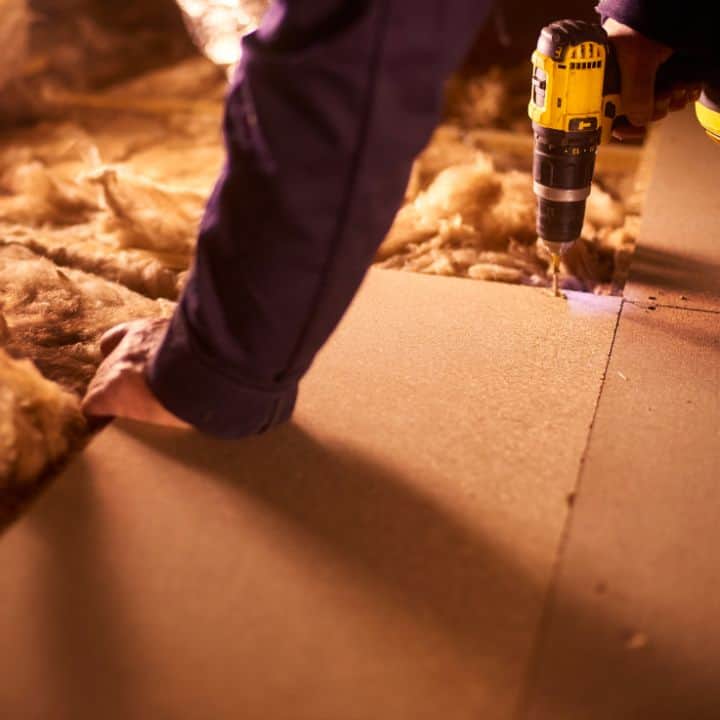
How much does loft boarding cost?
Our loft boarding costs £600–£2000 for a typical Hampshire property depending on area size and installation method. Professional installation ranges from £60–£75 per square metre. A 15 square metre boarding area would cost £900-£1200 for materials and labour, including boards, fixings, and raised supports to protect your insulation layer.
We offer free surveys and fixed-price quotes. Boarding an insulated loft requires our raised timber systems to preserve thermal performance. We also include loft ladder upgrades for an additional £600-£850.
What is the best way to board a loft?
The best way to board your loft with Loft Insulation Specialists involves our raised storage systems that sit safely above your Knauf Earthwool or Superfoil insulation layer. Here’s our complete approach broken down into 3 sections.
- 1
Raised Storage Systems
Stilted legs preserve full insulation depth (175mm or 225mm heights based on your setup).
Distributes weight across multiple joists to prevent point loading on timbers.
Adjustable legs compensate for uneven joist heights automatically.
- 2
Premium Floorboard Materials
18mm chipboard or OSB panels provide adequate strength for household storage.
Engineered for loft conditions with proper expansion gaps and fixings.
Compatible with our raised systems for a continuous, long-lasting floor.
- 3
Professional 1-2 Day Installation
Complete service including structural assessment of joist capacity.
Maintains ventilation gaps around eaves, ridge, pipes, and cables.
Leaves access hatches for water tanks, junction boxes, and maintenance.
Do I need building regulations approval for loft boarding?
Loft boarding with Loft Insulation Specialists doesn’t require building regulations approval in most cases. Boarding a loft for storage differs from loft conversion, which does need approval. Our loft boarding systems for simple storage don’t alter the building’s structure or fire safety.
Building regulations approval is required to convert a loft into liveable space, and the regulations are likely to apply if you add a stair and board and line the loft to make it more habitable. Laying boards over the existing joists may still need building control approval, and your local council can advise. We’ll confirm if you have any unusual circumstances.
Why Choose Loft Insulation Specialists for Loft Boarding Installation in Hampshire?
Award-Winning Insulation Services
We have been recognised as the 'Best Loft Insulation Installation Firm 2023 – Hampshire' by the Southern Enterprise Awards, an independent awarding body.

Guaranteed energy savings
We guarantee up to 35% lower energy bills by slashing heat loss, backed by our free survey, transparent results and full satisfaction pledge.
Proven Accredited Reliability
Checkatrade and Google reviews from Hampshire locals verify our punctuality, spotless sites and top-quality services - independent proof we deliver every time.
True Local Hampshire Experts
Fast same-week surveys and quotes, as well as tailored solutions for local projects mean quicker installs and better results than out-of-area firms.
40+ years of experience
With over 40 years of experience in insulation and home improvements, our team quickly diagnoses issues, gives better advice, and delivers installations done right the first time.
No-obligation surveys
Our surveys are always free with zero obligation. No high-pressure sales or jargon: just straightforward facts and options, respecting your decision every time.







Frequently asked questions
Take a look at the Frequently Asked Questions regarding our Loft Boarding Installation service.
How do I check if my loft joists can support boarding?
We check your joists during the survey, because their span between supports, their dimensions and their timber grade determine what they safely carry, and we don’t quote a limit until we’ve measured yours. Loft joists are generally not designed to support heavy loads, as LABC (Local Authority Building Control) puts it, which is why our boarding is intended for light storage. Our raised loft boarding systems spread weight across multiple joists, reducing point loading. Boarding loft roof trusses requires checking manufacturer specifications for trussed rafter systems.
We also check joist spacing and condition before quoting. Heavier items like filing cabinets need joist strengthening or should stay near load-bearing walls, and we’ll advise on weight limits during your survey.
Does loft boarding affect my home insurance?
Boarding and insulating loft spaces with Loft Insulation Specialists doesn’t affect standard home insurance policies. Storage boarding falls within normal home improvements. Boarding up loft areas for storage doesn’t need insurer notification in most cases. We can provide certificates if your insurer requests documentation.
Contents stored in your loft receive the same cover as items elsewhere in your home. Check your policy limits for valuable items stored in the loft space. Some policies limit single-item values or require specified high-value items. Update your contents insurance total if boarding allows you to store considerably more possessions.
What ventilation is required with loft boarding?
Boarding loft space with us requires maintaining existing ventilation gaps at eaves and ridges. Boarding out your loft shouldn’t block soffit vents or ridge tiles. We leave the airspace under the boards open at the eaves on opposite sides of the loft, letting air flow across the top of the insulation. Boarding your loft completely without ventilation gaps causes condensation problems.
Warm moist air rising from your living spaces needs to escape through the roof. Blocked ventilation traps this moisture against cold surfaces, causing dampness and potential timber decay. Our professional installers design boarding layouts that maintain adequate airflow paths.
How does loft boarding impact my NHBC warranty?
Your warranty terms decide, and they’re worth reading before you board. NHBC’s own homeowner guidance says the loft isn’t intended as a storage area, and we can’t promise what your particular warranty will or won’t cover once the loft is boarded.
Contact NHBC before installation if you have concerns about specific warranty terms. They may request notification of works exceeding certain thresholds. Keep all installation receipts and certificates with your property documents. Future buyers will want evidence of our professional installation standards.
Can loft boarding improve my EPC rating?
Loft boarding out with Loft Insulation Specialists doesn’t directly improve EPC ratings but supports insulation effectiveness. A boarded loft with properly maintained insulation depth scores better than compressed loft insulation. We recommend raised systems specifically because they preserve thermal performance. Poor installation that compresses insulation could actually worsen your EPC score.
Energy assessors check insulation depth during EPC surveys. They’ll note if boarding has compressed the insulation layer. Our raised boarding systems show assessors that you’ve protected your insulation investment. This attention to detail reflects well in property surveys and buyer due diligence.