
Spray Foam Insulation Removal Hampshire
Spray Foam Insulation Removal Services in Hampshire
Many Hampshire homeowners face mortgage rejections and insurance issues due to poorly installed spray foam insulation. At Loft Insulation Specialists, we provide expert spray foam removal to resolve these problems and restore your property’s value. Removal usually takes 2–5 days. Here’s everything you need to know about our extraction process, costs, and how it impacts your warranties and mortgageability.
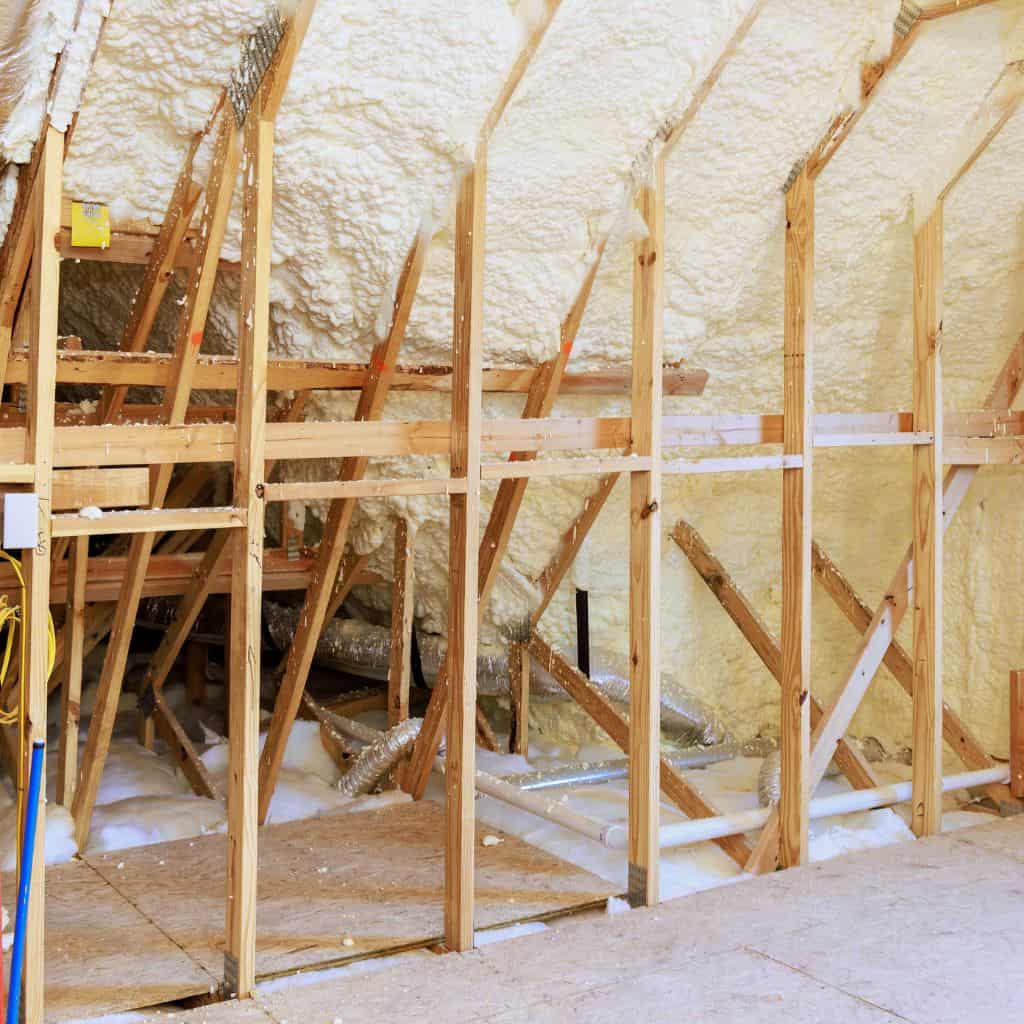
How do I get spray foam insulation removed from my home?
Removing spray foam roof insulation requires our specialist team at Loft Insulation Specialists, equipped with extraction tools and safety certifications that standard builders lack. Here’s our complete 5-step process for safe, efficient removal that usually takes 2–5 days depending on your loft’s coverage.
Book Your Specialist Survey
Contact us to arrange your initial survey where we inspect your loft, identify foam type (open-cell vs closed-cell), and check underlying timber condition.
Receive Your Detailed Quote
We provide an itemised quote covering extraction, licensed disposal, and replacement insulation with Knauf Earthwool or Superfoil, based on what the survey finds.
Safe Foam Extraction
Our technicians remove the foam by hand, scraping it from the rafters and using a chemical softening treatment where it has bonded hard, and they bag all debris for licensed disposal. We only carry out full removal: partial stripping leaves lenders with the same objection.
Exposed Timbers
Once the foam is off, the rafters are visible again. If we see moisture staining or soft timber we tell you before replacement insulation goes in, and you can arrange a timber specialist or structural survey with that information.
Completion & Documentation
On completion you receive a completion letter from Loft Insulation Specialists confirming that the spray foam has been fully removed from the roof space. Lenders and surveyors accept this letter as the record of removal.
Will removing spray foam improve my EPC rating or home value?
Our spray foam removal company reports that property values often increase after extraction and proper insulation replacement with Knauf Earthwool or Superfoil Insulation. The foam itself might show a good EPC rating, but the mortgage restrictions knock 10–20% off market value for many buyers. Spray foam removal followed by traditional insulation restores full marketability while maintaining similar thermal performance.
Your EPC rating might dip slightly immediately after removal if you don’t replace the insulation quickly. Mineral wool or rigid board alternatives perform nearly as well thermally. Most homeowners see their property become attractive to a much wider buyer pool once the spray foam stigma disappears. Estate agents report faster sales and better offers on properties with our verified foam removal certificates.
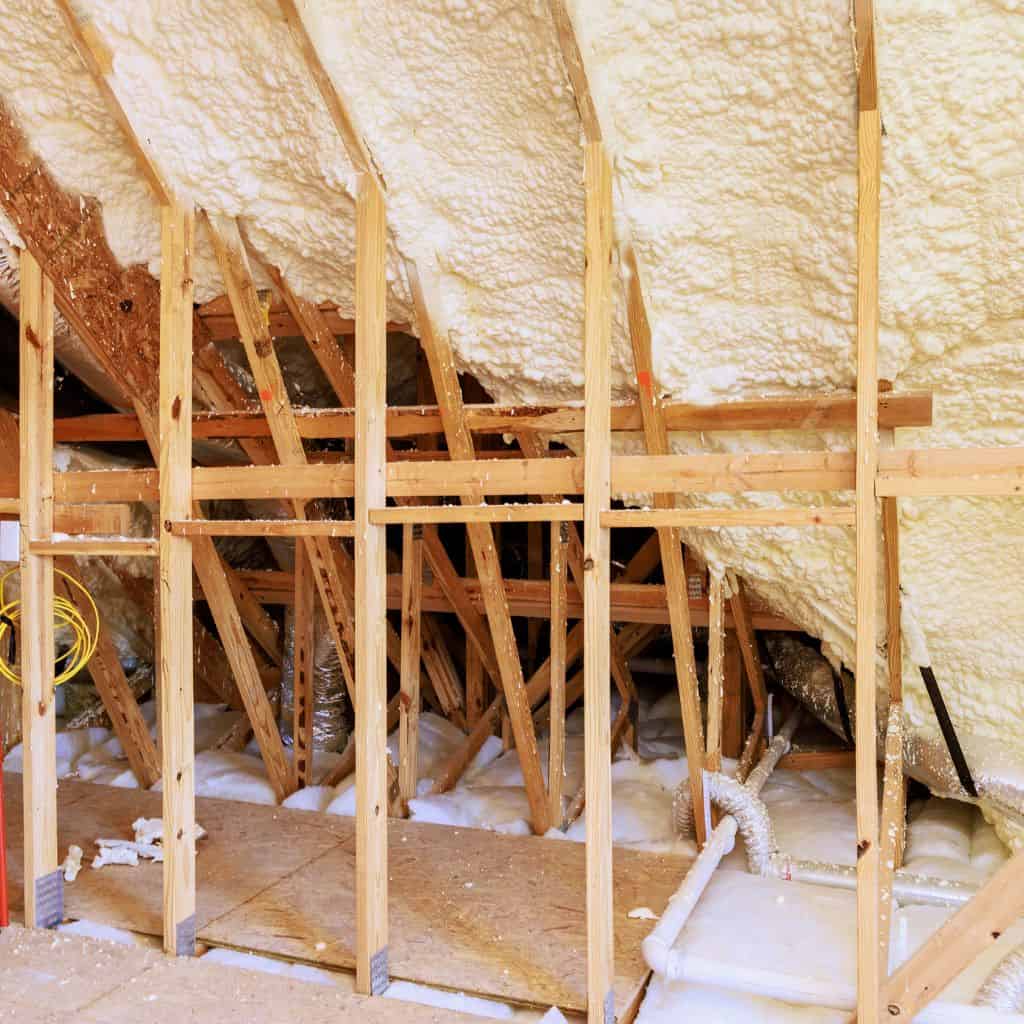
How much does spray foam insulation removal cost?
Our spray foam loft insulation removal costs between £1,500 and £10,000 for a typical Hampshire property. The price depends on your loft size, foam thickness, whether it’s open-cell or closed-cell, and accessibility. Our spray foam roof insulation removal uses specialist equipment and trained technicians for safe, efficient results.
Most contractors charge £40–£120 per square metre for extraction work. A 50 square metre loft area would cost £2,500–£6,000 for removal alone, depending on whether it’s open-cell or closed-cell spray foam insulation. We’ll help you budget for replacement insulation like Knauf Earthwool. We offer package deals including removal, treatment, and reinstallation of traditional insulation.
Will spray foam insulation stop me getting a mortgage?
BBC News research found that five of the 20 largest UK lenders would not lend on homes with spray foam in the roof space, while others decide case by case on a valuer’s report. At Loft Insulation Specialists, our spray foam removal makes your Hampshire property mortgageable again. Here are the three main reasons lenders reject spray foam properties:
- 1
Hidden Timber Condition
Lenders can’t visually inspect rot or damage beneath the foam during standard surveys.
Hidden moisture issues could lead to costly structural repairs they’d inherit on default.
Surveyors classify it as a “material defect” requiring specialist investigation.
- 2
Widespread Lender Policies
Major high-street lenders (Nationwide, NatWest) consider spray foam properties case by case and take a valuer’s report into account.
Lenders that refuse outright include TSB, Skipton and the Co-operative Bank.
Industry-wide guidance from UK Finance flags foam as non-standard construction.
- 3
Removal is Cheaper Long-Term
Unfavourable specialist mortgage terms add thousands in extra interest over the loan.
Our removal + Knauf Earthwool replacement costs less than accepting poor terms.
Clean structural survey post-removal makes standard mortgages available for all buyers.
Does spray foam insulation cause damp or condensation problems?
Removing spray foam insulation from roof spaces often reveals moisture and condensation problems that the foam was hiding. Closed-cell foam traps moisture against timber, and any staining or softening stays out of sight until the foam comes off. Removal exposes the rafters, which lets you see their condition for the first time in years.
The foam blocks the ventilation a cold roof space relies on. Moisture from inside your home can’t escape through the roof structure, and it condenses against cold surfaces and soaks into timber. We restore the eaves ventilation after removal, and we tell you about any timber that looks damaged, which lets you arrange a specialist inspection before new insulation goes in.
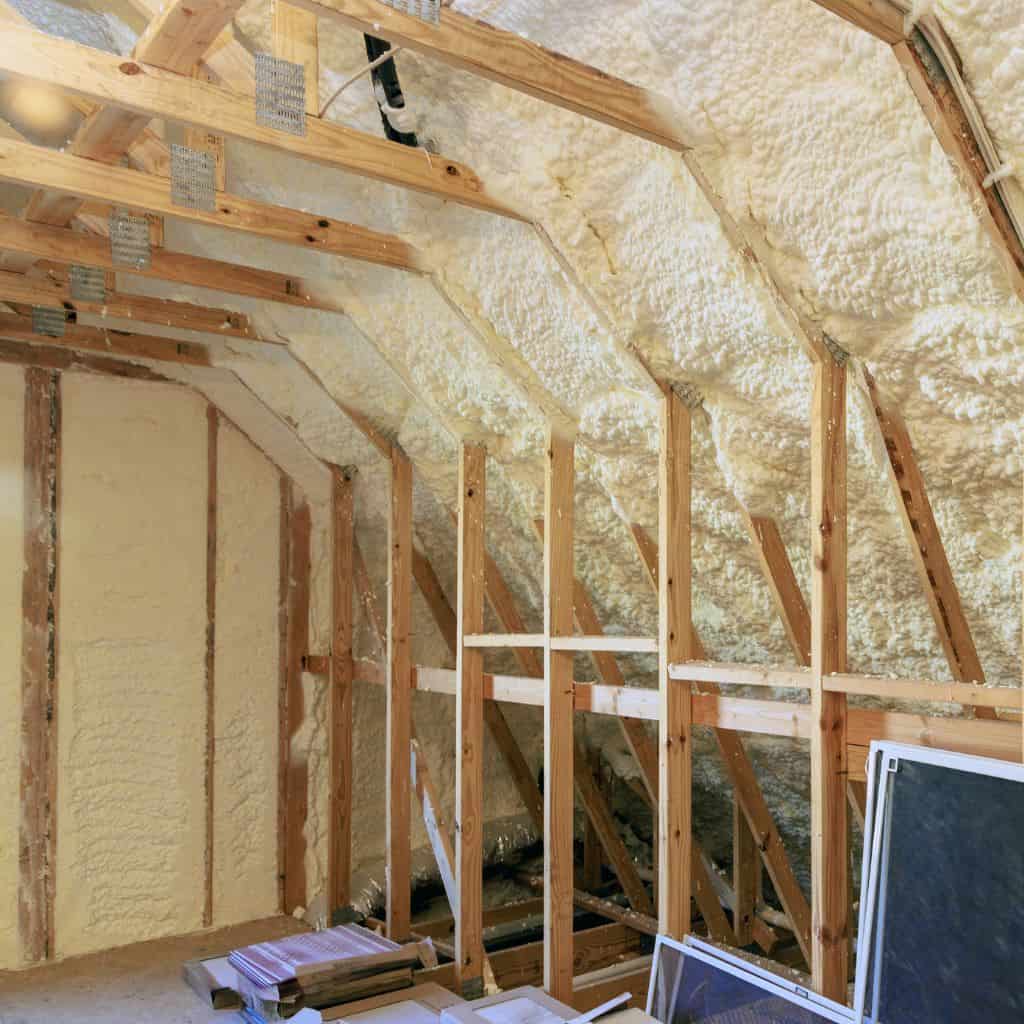
Why Choose Loft Insulation Specialists for Spray Foam Insulation Removal in Hampshire?
Award-Winning Insulation Services
We have been recognised as the 'Best Insulation Installation Firm Hampshire - 2023' by the Southern Enterprise Awards, an independent awarding body.

Guaranteed energy savings
We guarantee up to 35% lower energy bills by slashing heat loss, backed by our free survey, transparent results and full satisfaction pledge.
Proven Accredited Reliability
Checkatrade and Google reviews from Hampshire locals verify our punctuality, spotless sites and top-quality services - independent proof we deliver every time.
True Local Hampshire Experts
Fast same-week surveys and quotes, as well as tailored solutions for local projects mean quicker installs and better results than out-of-area firms.
40+ years of experience
With over 40 years of experience in insulation and home improvements, our team quickly diagnoses issues, gives better advice, and delivers installations done right the first time.
No-obligation surveys
Our surveys are always free with zero obligation. No high-pressure sales or jargon: just straightforward facts and options, respecting your decision every time.







Frequently asked questions
Take a look at the Frequently Asked Questions regarding our Spray Foam Insulation Removal service.
What building control approval do I need before spray foam removal?
Loft spray foam removal doesn’t require building control approval in most cases. The original installation might have needed notification, but removing insulation falls outside building regulations. You won’t need planning permission either. The only exception involves listed buildings or properties in conservation areas, where you should check with your local authority first.
We’ll still follow proper procedures for waste disposal. Spray foam counts as construction waste requiring licensed disposal sites, and we handle this for you. Keep our completion letter with your property file, because future buyers and surveyors will want proof that the foam was fully removed.
How does spray foam removal affect my home insurance premiums?
Our spray foam removal work usually reduces your home insurance costs once extraction completes. Many insurers charge higher premiums or add exclusions for properties with spray foam roofs. The foam makes fire damage assessments difficult and can accelerate fire spread in some formulations. Removing it with us eliminates these underwriting concerns.
Contact your insurer before and after removal. Some policies require notification of any work affecting roof structures. After extraction, request written confirmation that standard terms now apply. You might need a new survey or inspection before they adjust your premium. The savings over time usually offset a portion of removal costs for most homeowners.
Can partial spray foam removal cause worse thermal bridging than full extraction?
Foam insulation removal should always be complete rather than partial to avoid creating new cold bridge problems. Leaving foam patches creates temperature differentials where condensation forms. The edges of remaining foam become moisture collection points. Partial removal often causes worse problems than the original installation.
Full extraction allows proper assessment of all timber surfaces. Your Loft Insulation Specialists team can treat the entire roof structure uniformly and install replacement insulation consistently. The cost difference between partial and complete removal rarely justifies the risks of incomplete work. We only perform full extractions because of the liability concerns.
What happens to my NHBC or structural warranty after foam removal?
Foam roof insulation removal may restore warranty coverage that spray foam installation voided. NHBC and similar warranty providers often exclude claims related to spray foam damage. The foam application itself might have breached warranty terms. Our removal and remediation with Knauf Earthwool brings your property back into compliance.
Contact your warranty provider before starting removal work. They may want to inspect during the process or specify approved contractors. Get their position in writing regarding coverage after extraction. Some warranties require specific remediation standards that our removal team understands. Keep all documentation for future reference and property sales.
How long should I ventilate my home after spray foam extraction?
Spray loft insulation removal requires 48–72 hours of enhanced ventilation after the work completes. Extraction disturbs foam particles and releases trapped chemicals. Keep windows open and run fans to clear any airborne residue. People with respiratory conditions should stay elsewhere during removal and the ventilation period.
We’ll seal off the loft access during work to prevent contamination spreading through your home. After completion, we install temporary extraction fans. Normal occupancy can resume once the loft is fully cleared and the ventilation period is complete. Most families return to normal use within 3–4 days of project completion.