
Spray Foam Insulation Removal Portsmouth
Professional Spray Foam Removal in Portsmouth
At Loft Insulation Specialists, we help Portsmouth homeowners remove problem spray foam and get their property mortgage-ready. If you have spray foam insulation in your loft — common across Southsea, Fratton and Cosham — you may already have run into difficulties selling or remortgaging, as around 80% of UK mortgage providers decline properties with spray foam and affected homes can lose 10–20% of their market value. We provide professional spray foam removal across Portsmouth, fully extracting the foam from your roof timbers so your property meets lender requirements and is ready for sale or remortgage. Every job starts with a free, no-obligation survey.
How Portsmouth homeowners benefit from Spray Foam Removal
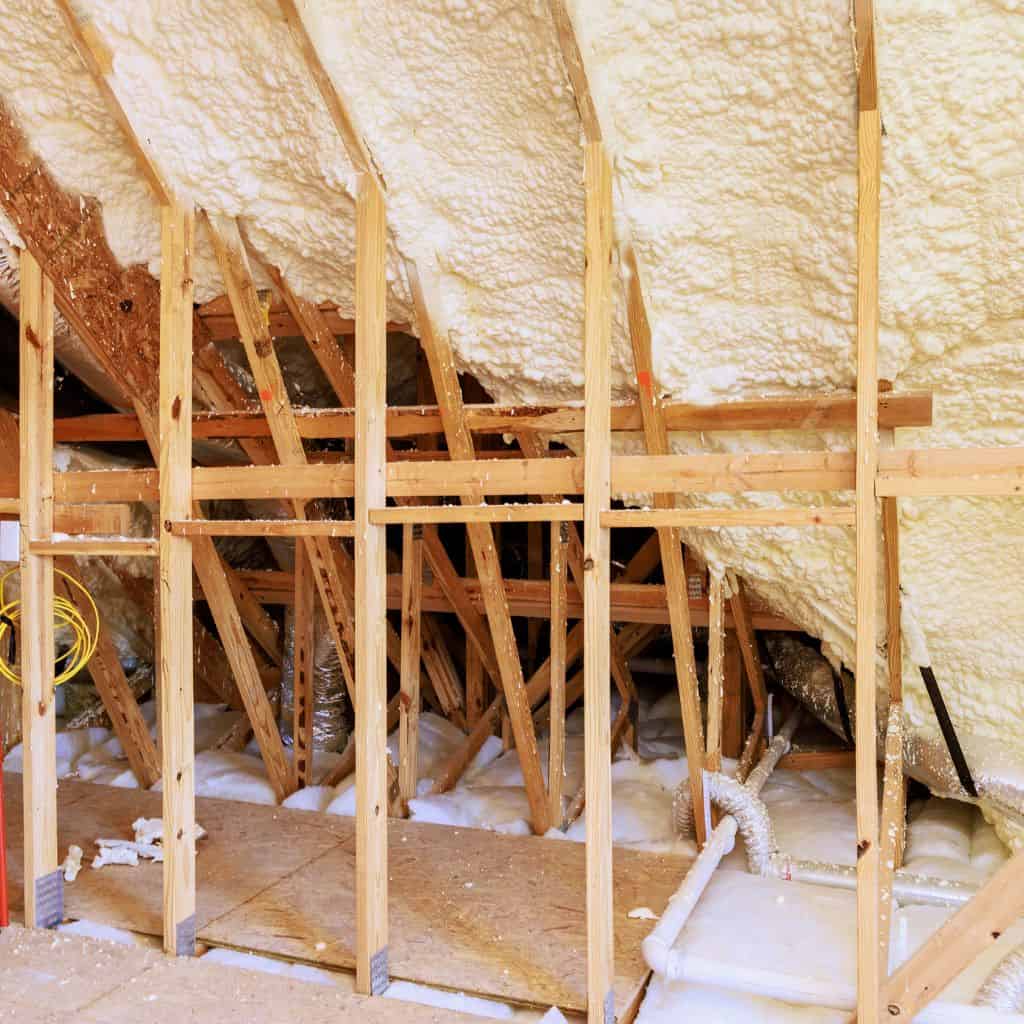
Spray foam insulation was widely marketed as an effective way to insulate your roof space, and many Portsmouth homeowners had it installed in good faith. The reality is that around 80% of mortgage lenders now refuse to approve lending on properties where spray foam has been applied to the roof timbers. The foam can mask structural issues with timbers, trap moisture, and prevent proper inspection of the roof structure. For property owners across Portsmouth, this means that what was intended as a home improvement has become a significant liability that needs professional resolution. Properties with spray foam can lose 10-20% of their market value. We carry out full removals only — partial removal is not offered, as it does not satisfy lender requirements.
Why Mortgage Lenders Reject Spray Foam
Mortgage lenders require a clear assessment of the roof structure before approving a loan. When spray foam is bonded to the timbers, surveyors cannot check for rot, woodworm, or structural movement. In Portsmouth, where many properties are Victorian or Edwardian terraces with older roof timbers, this is a critical concern. Around 80% of UK lenders will decline a mortgage application outright if spray foam is identified. This applies whether the foam is open-cell or closed-cell, and regardless of when it was installed.
Open-Cell and Closed-Cell Foam Removal
There are two main types of spray foam insulation found in Portsmouth lofts. Open-cell foam is softer and more sponge-like, while closed-cell foam is rigid and denser. Both types bond to roof timbers and underlay, but they require different removal approaches. Open-cell foam can generally be removed more quickly by manual scraping, while closed-cell foam often requires chemical softening before it can be scraped away. Our team assesses the foam type during the initial survey and plans the removal method accordingly.
How We Remove Spray Foam
Our spray foam removal process in Portsmouth follows a methodical approach. We begin with a full survey of the foam type and coverage area, identifying whether it is open-cell or closed-cell so we can plan the right method. We then provide a fixed quote. The removal itself uses manual scraping, with chemical softening agents where needed, working section by section across the roof space to ensure complete removal from every timber, rafter, and section of underlay. The loft is left clean and ready for inspection. Removal typically takes 2-5 days depending on foam type and coverage area. Once the foam is removed, we allow 48-72 hours for ventilation. The total process takes approximately 3-4 days before normal occupancy can resume, and we finish by providing a completion letter.
Protecting Your Roof Timbers
A key concern during spray foam removal is preserving the integrity of the roof timbers beneath. Our technicians use controlled techniques that remove the foam without gouging or damaging the wood surface. We combine careful manual scraping with chemical softening where needed, so the foam can be lifted away cleanly rather than forced off the timbers. In Portsmouth properties, particularly older ones near the coast, this careful approach is an essential part of the process, leaving the roof structure clear and ready for a surveyor’s inspection.
Completion Letter for Lenders
After removal is complete, we provide a completion letter confirming that all spray foam has been removed from the roof space and that the work complies with building regulations and standards. It is designed to satisfy mortgage lenders, surveyors, and solicitors involved in your property transaction. For Portsmouth homeowners, this letter is the final step in making your property mortgageable again. The service includes a full survey, foam-type identification, complete removal of all spray foam, and a completion letter you can pass to your lender or solicitor.
How our Spray Foam Removal service works in Portsmouth
Take a look below to find out how our Spray Foam Removal service works in Portsmouth,
- 1
Book your free Portsmouth survey
Spray foam prevents surveyors from inspecting roof timbers, leading around 80% of mortgage lenders to decline applications on affected properties across Portsmouth.
Spray foam bonds directly to roof timbers and underlay, trapping moisture and preventing surveyors from inspecting the condition of the structure beneath it.
Properties with spray foam insulation can lose 10-20% of their market value, with surveyor valuations commonly reduced when foam is identified, affecting buyer borrowing limits and sale prices in Portsmouth.
- 2
Receive your fixed price quote
A full initial survey to assess foam type, coverage area, and condition of the roof structure before any removal work begins in your Portsmouth property.
Complete removal of all spray foam using manual scraping and chemical softening where needed, suited to the specific foam type in your loft. We carry out full removals only — partial removal does not satisfy lender requirements.
A completion letter confirming that all spray foam has been removed in compliance with building regulations and standards, which you can present to your mortgage lender or solicitor.
- 3
Professional Spray Foam Removal service provided
Resolving mortgage lender objections so that your Portsmouth property can be sold or remortgaged without the barrier of spray foam being flagged in surveys.
Exposing roof timbers for proper inspection, giving you and any future buyer confidence in the structural condition of the roof.
Restoring your property's full market value by removing a defect that can reduce valuations by thousands of pounds in the Portsmouth area.
How much does Spray Foam Removal cost in Portsmouth?
Spray foam removal costs in Portsmouth typically range from £1,500 to £10,000. On a per-square-metre basis, costs typically fall between £40 and £120/m². For a typical 50m² loft, homeowners can expect to pay between £2,500 and £6,000 depending on the size of the area affected, the type of foam (open-cell or closed-cell), and the accessibility of the roof space. Closed-cell foam generally costs more to remove due to the additional labour and chemical treatment required.
Every Portsmouth property is different, so we carry out a free, no-obligation survey before providing a fixed quotation. Factors such as the pitch of the roof, the number of sections to be cleared, and whether the foam extends to hard-to-reach areas all influence the final cost. There are no hidden charges — the price we quote is the price you pay, with no high-pressure sales or jargon.
While spray foam removal is an investment, it is one that directly enables your property sale or remortgage to proceed. For many Portsmouth homeowners, the cost of removal is far outweighed by the financial impact of a failed transaction or a reduced property valuation.
After removal, we can advise on re-insulation options including Knauf Earthwool, Superfoil, mineral wool, or rigid board to restore your loft’s thermal performance using lender-approved materials.
The Portsmouth suburbs we provide Spray Foam Removal services to:
Anchorage Park, Buckland, Copnor, Cosham, Drayton, Eastney, Farlington, Fratton, Highbury, Hilsea, Landport, Milton, North End, Old Portsmouth, Paulsgrove, Portsea, Somerstown, Southsea, Stamshaw, Tipner, Wymering
Our services in Portsmouth
Spray Foam Insulation Removal Portsmouth Nearby
Why Choose us for Spray Foam Removal in Portsmouth?
Award-Winning Services
We have been recognised as the 'Best Insulation Installation Firm Hampshire - 2023' by the Southern Enterprise Awards, an independent awarding body.

Guaranteed energy savings
We guarantee up to 35% lower energy bills by slashing heat loss, backed by our free survey, transparent results and full satisfaction pledge.
Proven Accredited Reliability
Checkatrade and Google reviews from Hampshire locals verify our punctuality, spotless sites and top-quality services - independent proof we deliver every time.
True Local Hampshire Experts
Fast same-week surveys and quotes, as well as tailored solutions for local projects mean quicker installs and better results than out-of-area firms.
40+ years of experience
With over 40 years of experience in insulation and home improvements, our team quickly diagnoses issues, gives better advice, and delivers installations done right the first time.
No-obligation surveys
Our surveys are always free with zero obligation. No high-pressure sales or jargon: just straightforward facts and options, respecting your decision every time.







Frequently asked questions
Take a look at the Frequently Asked Questions regarding our Spray Foam Removal services in Portsmouth.
Why do mortgage lenders reject properties with spray foam insulation in Portsmouth?
Mortgage lenders require a clear view of roof timbers so that surveyors can assess their structural condition. Spray foam bonds directly to timbers and underlay, making this inspection impossible. Around 80% of UK lenders will not approve a mortgage on a property where spray foam is present, regardless of its age or condition. This affects properties right across Portsmouth, from older terraces in Southsea to newer builds in Cosham. Properties with spray foam can lose 10-20% of their market value as a result.
How much does spray foam removal cost in Portsmouth?
Costs for spray foam removal in Portsmouth typically range from £1,500 to £10,000, or £40-£120 per square metre. For a typical 50m² loft, expect to pay between £2,500 and £6,000. The price depends on the area covered, the type of foam installed, and the accessibility of your roof space. We provide a fixed quote after an initial survey so you know exactly what the work will cost before we begin.
How long does spray foam removal take?
Most spray foam removal jobs in Portsmouth are completed within 2-5 days, depending on the size of the roof space and the type of foam. Open-cell foam is generally quicker to remove than closed-cell foam. We will give you a clear timeframe when we provide your quotation. Following extraction, we allow 48-72 hours for post-ventilation before conducting the final assessment. The total process typically takes 3-4 days before normal occupancy can resume.
Will the removal process damage my roof timbers?
Our removal techniques are designed to preserve the integrity of your roof timbers. We use controlled manual scraping and chemical softening to lift the foam carefully, without gouging or weakening the wood beneath. Working section by section, we fully remove all of the spray foam while protecting the timbers underneath, leaving the roof structure clean and clear for inspection.
Does Portsmouth's coastal climate affect spray foam removal?
Coastal conditions in Portsmouth can mean that moisture levels around roof timbers are slightly higher, which can affect how spray foam has interacted with the wood over time. Our team takes this into account during removal, working carefully around any moisture-affected areas as the foam is taken off the timbers. The removal process itself is not affected by coastal conditions. Our primary recommendation is Knauf Earthwool, with other options including Superfoil, mineral wool, and rigid board insulation — all fully accepted by mortgage lenders. We only carry out full removals — partial removal is not offered, as it does not resolve the underlying lender objection.
About Portsmouth
Portsmouth
About PortsmouthPortsmouthCity & unitary authority areaPortsmouth Harbour, including Spinnaker TowerThe GuildhallSouthsea BeachHMS VictoryMary Rose MuseumGunwharf QuaysClarence PierFlagCoat of ArmsNickname: PompeyMotto: Heaven’s Light Our GuideShown within HampshirePortsmouthLocation within the United KingdomCoordinates: 50°48′21″N 01°05′14″W / 50.80583°N 1.08722°W Sovereign state United Kingdom Country England Region South East England Ceremonial county Hampshire Government • Type Unitary authority, city • Governing body Portsmouth City Council • Leadership Leader and Cabinet (No overall council control) • Lord Mayor Gerald Vernon-Jackson • Members of Parliament Stephen Morgan (L)
Amanda Martin (L)[2]Area • City & unitary authority area15.54 sq mi (40.25 km2) Population (2011, 2021)• City & unitary authority area208,100[1][a] • Urban 238,137[4][c] • Metro 855,679 (South Hampshire)[3][b] Ethnicity (2021) [5]• Ethnic groups List- 85.2% White
- 6.9% Asian
- 3.4% Black
- 2.6% Mixed
- 1.8% other
Religion (2021) [5]• Religion List- 47.1% no religion
- 39.4% Christianity
- 6.4% not stated
- 4.9% Islam
- 0.8% Hinduism
- 0.6% other
- 0.5% Buddhism
- 0.2% Sikhism
- 0.1% Judaism
Time zone UTC+0 (GMT) • Summer (DST) UTC+1 (BST) Postal code POArea code 023 ISO 3166 code GB-POR Police Hampshire and Isle of Wight Ambulance South Central Fire Hampshire and Isle of Wight Website portsmouth .gov .uk Portsmouth (/ˈpɔːrtsməθ/ ⓘ PORTS-məth) is a port city and unitary authority in Hampshire, England. Most of Portsmouth is located on Portsea Island, off the south coast of England in the Solent, making Portsmouth the only city in England not located primarily on the mainland. The city is located 22 miles (35 km) south-east of Southampton, 50 miles (80 km) west of Brighton and Hove and 74 miles (119 km) south-west of London. With a population last recorded at 208,100, it is the most densely populated city in the United Kingdom. Portsmouth forms part of the South Hampshire urban area with Gosport, Fareham, Havant, Eastleigh and Southampton.
Portsmouth’s history can be traced to Roman times and it has contained a significant Royal Navy dockyard and base for centuries. Portsmouth was founded c. 1180 by Anglo-Norman merchant Jean de Gisors in the south-west area of Portsea Island, a location now known as Old Portsmouth. Around this time, de Gisors ordered the construction of a chapel dedicated to St Thomas Becket. This became a parish church by the 14th century. Portsmouth was established as a town with a royal charter on 2 May 1194. The city is home to the first drydock ever built. It was constructed by Henry VII in 1496.
Portsmouth has the world’s oldest dry dock, “The Great Stone Dock”; originally built in 1698, rebuilt in 1769 and presently known as “No.5 Dock”. The world’s first mass production line was established at the naval base’s Block Mills which produced pulley blocks for the Royal Navy fleet. By the early-19th century, Portsmouth was the most heavily fortified city in the world, and was considered “the world’s greatest naval port” at the height of the British Empire throughout Pax Britannica. By 1859, a ring of defensive land and sea forts, known as the Palmerston Forts, had been built around Portsmouth in anticipation of an invasion from continental Europe.
In the 20th century, Portsmouth achieved city status on 21 April 1926. During the Second World War, the city was bombed extensively in the Portsmouth Blitz, which resulted in the deaths of 930 people, and it was a pivotal embarkation point for the D-Day landings. In 1982, a large Royal Navy task force departed from Portsmouth for the Falklands War. Her Majesty’s Yacht Britannia was formerly based in Portsmouth and oversaw the transfer of Hong Kong in 1997, after which Britannia was retired from royal service, decommissioned and relocated to Leith as a museum ship.
Featured Business LocationLoft Insulation Specialists near Portsmouth
general contractor, manufacturer, service
5 stars (8 reviews)Phone: 023 9326 7900Nearby Suburbs