
Loft Insulation Hampshire
Loft Insulation Services in Hampshire
At Loft Insulation Specialists, we help Hampshire homeowners upgrade their loft insulation to cut energy bills, boost comfort, and increase property value. Whether you’re asking whether ECO4 funding could contribute towards the cost, checking your current setup, or planning installation with Knauf Earthwool or Superfoil, here’s everything you need to make an informed decision about improving your home’s efficiency.
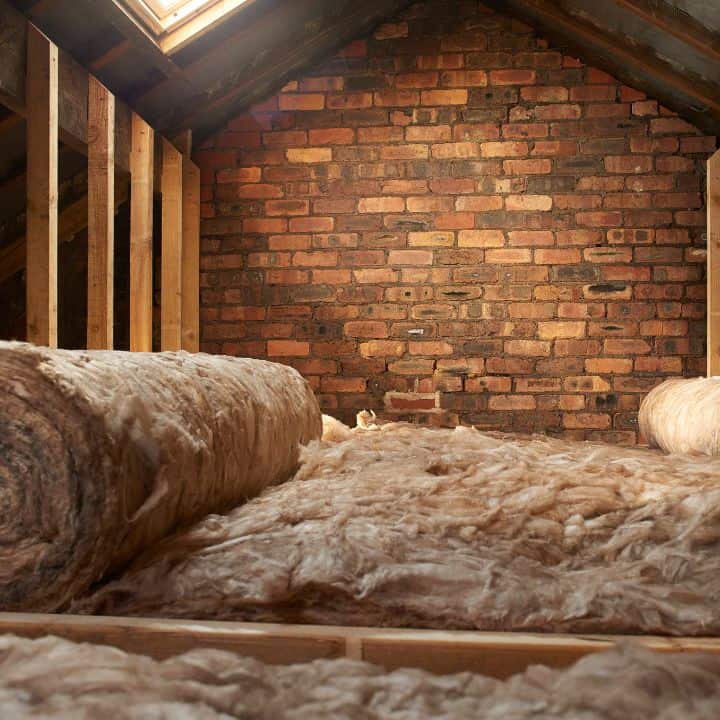
What are the signs my loft needs new insulation, and how do I check?
Your loft needs new insulation if you spot compressed, damp, or sparse material below 100mm depth – far short of our recommended 300mm Knauf Earthwool standard for maximum energy efficiency. At Loft Insulation Specialists, we help you identify these issues safely during a free survey. Here’s our 5-step checklist to assess your loft condition.
Measure Insulation Depth
Climb up safely during daylight and measure between joists using a ruler or tape measure. Anything below 100mm falls short of modern standards. Most homes need topping up to our 300mm depth for maximum heat retention and bill savings.
Check for Compression
Stored items or foot traffic compress insulation, and compressed material loses much of its effectiveness, creating cold spots downstairs. Knauf says its rolls work by trapping air between the fibres and that compressing them reduces their effectiveness considerably. Gently press down – if it doesn’t spring back fully, replacement is needed.
Look for Gaps Between Batts
Visible gaps or thin patches between joists let heat escape rapidly. These often appear near walls, around pipes, or at eaves edges. Uneven coverage wastes energy and indicates settling that requires professional attention.
Spot Water Staining or Damage
Brown stains, discolouration, or clumping signal roof leaks or condensation. Rodent droppings or mould growth are red flags too. Damaged insulation never performs properly, and we’ll identify and remove contaminated areas during installation.
Review Your Energy Bills
If heating costs spike despite steady usage, thin or ineffective insulation is likely the cause. Compare bills year-over-year – a 10–20% unexplained rise often traces back to loft heat loss. Our survey confirms this correlation with actual measurements.
Can I get help paying for loft insulation?
Your home may qualify for help with loft insulation if you receive certain benefits or meet income thresholds under the ECO4 scheme running until 2026. We check your Energy Performance Certificate rating, because only homes rated D, E, F or G can be treated under ECO4. During your free survey, we measure how much insulation is already there, because ECO4 funds a loft with 100mm or less and a deeper loft as two separate installations. A loft that already has some insulation is not ruled out.
You may be eligible if you claim Pension Credit or Universal Credit, or Child Benefit (subject to income thresholds), or other means-tested benefits, as long as your home’s rating also fits. We help both owner-occupiers and private tenants. Landlords need to provide written permission before we start. For private tenants on these benefits, ECO4 also needs the home to be rated E, F or G. Loft insulation in their home qualifies only alongside a measure such as solid wall insulation or a renewable heating system. The energy supplier funding the work decides how much of the materials and labour it covers, and Ofgem says you may be asked to contribute.
How much does loft insulation cost?
Loft insulation with Loft Insulation Specialists costs between £600–£1,500 for a typical three-bedroom semi-detached home. Prices vary based on access difficulty and material type – we use Knauf Earthwool at 100mm-200mm for excellent value and performance. Superfoil insulation is ideal for tighter spaces. We provide free assessments before giving final fixed prices, usually £15–£22 per square metre including materials and labour.
Clearing your loft, with the old insulation handed only to a registered waste carrier or a permitted site, adds £650 if needed, but most jobs finish in 4–6 hours with predictable daily rates.
How long does loft insulation installation take, and is it messy?
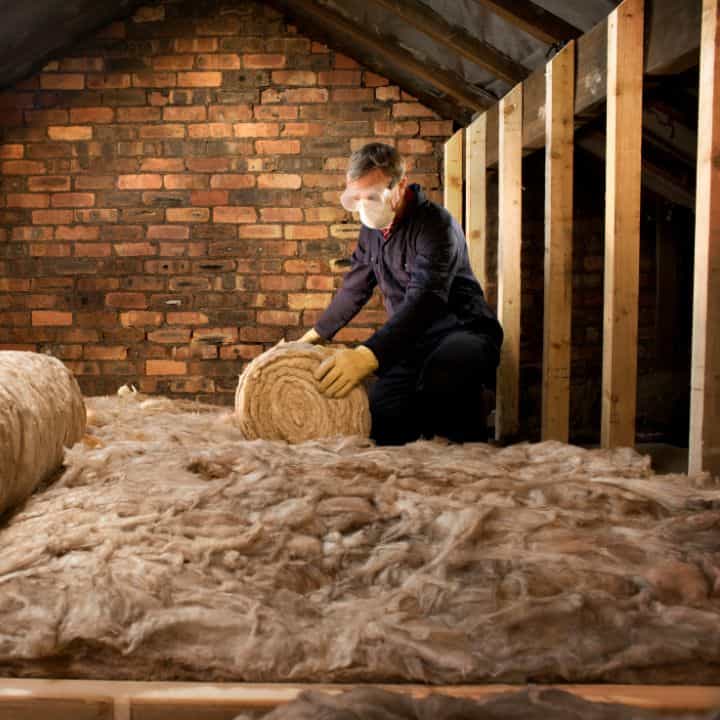
Loft insulation installation with Loft Insulation Specialists takes 4-6 hours for most average-sized lofts with good access, and we keep it clean and hassle-free using protective measures from start to finish. Complex jobs or removing old spray foam insulation first might extend to 1-3 days, but you can usually stay home comfortably throughout.
- 1
Preparation & Protection
Clear stored items and lay protective sheeting over floors and furniture below.
Vacuum loose debris first to minimise dust generation.
Two-person crew sets up equipment quickly without needing your ladders or tools.
- 2
Insulation Installation
Roll out batts precisely between joists for full coverage with minimal disturbance.
Generates far less dust than blown-in methods – most homes stay liveable.
Noise stays manageable, with no heavy machinery or disruptive cutting required.
- 3
Cleanup & Accessibility
Bag all waste insulation and sweep the loft space thoroughly.
Leave your loft immediately usable for storage once we depart.
Same-day completion guarantee for standard jobs with full tidying included.
Will loft insulation increase my home's value or EPC rating?
Loft insulation with Loft Insulation Specialists increases your EPC rating by 1–2 bands on average, pushing a D-rated property into C or B territory. This upgrade can boost resale value by £5,000–£15,000 in Hampshire markets. Estate agents love highlighting our thermal improvements to eco-conscious buyers. We document the work with photos and certificates before your EPC assessor visits to secure the highest rating.
Buyers now filter searches by EPC rating – higher ratings attract more viewings and quicker sales. Every band improvement adds 5–10% to your asking price. Older properties with minimal or absent insulation see the biggest gains.
Why Choose Loft Insulation Specialists for Loft Insulation in Hampshire?
Award-Winning Insulation Services
We have been recognised as the 'Best Loft Insulation Installation Firm 2023 – Hampshire' by the Southern Enterprise Awards, an independent awarding body.

Guaranteed energy savings
We guarantee up to 35% lower energy bills by slashing heat loss, backed by our free survey, transparent results and full satisfaction pledge.
Proven Accredited Reliability
Checkatrade and Google reviews from Hampshire locals verify our punctuality, spotless sites and top-quality services - independent proof we deliver every time.
True Local Hampshire Experts
Fast same-week surveys and quotes, as well as tailored solutions for local projects mean quicker installs and better results than out-of-area firms.
40+ years of experience
With over 40 years of experience in insulation and home improvements, our team quickly diagnoses issues, gives better advice, and delivers installations done right the first time.
No-obligation surveys
Our surveys are always free with zero obligation. No high-pressure sales or jargon: just straightforward facts and options, respecting your decision every time.







Frequently asked questions
Take a look at the Frequently Asked Questions regarding our Loft Insulation service.
What happens if my loft insulation settles or becomes uneven over time?
Settled or uneven loft insulation loses effectiveness where it is thin or squashed, creating cold spots below. Loft Insulation Specialists can top up settled material rather than replacing everything, and we add new layers of Knauf Earthwool above the old insulation. We measure depth variations across your loft and identify areas needing extra material to reach 270mm+.
We redistribute loose-fill insulation and level uneven areas before adding fresh batts. We check for moisture damage causing premature compression, because wet insulation never fully recovers. Topping-up costs far less than full replacement. Schedule annual checks with us to catch issues early.
Can loft insulation cause condensation or loft moisture problems?
Loft insulation can raise the risk of condensation in your loft, because it retains the heat downstairs and leaves the loft colder, and moist air rising from the house condenses on cold timbers and felt where ventilation is inadequate. We keep the eaves open and let moist air escape through the soffit vents. Our breathable membranes between Knauf Earthwool/Superfoil and roof timbers reduce the risk while permitting airflow.
Condensation builds where moist air meets a cold loft with poor ventilation, and a thicker insulation layer makes the loft colder. We find it in poorly ventilated lofts causing black mould on timbers. We retrofit additional ventilation tiles or ridge vents if needed, measuring humidity before and after to confirm the additional ventilation has brought it down. Monitor during the first year to catch issues early.
How do I know if my loft has enough ventilation before adding insulation?
Your loft has enough ventilation if you see continuous soffit vents along eaves and ridge vents/tiles at the peak. We recommend an opening equivalent to a continuous 10mm gap along the eaves on each side for a roof pitched steeper than 15 degrees, the usual figure in the British Standard on moisture in buildings, which asks for 25mm where the pitch is 15 degrees or less. Check for blocked airbricks or felt obstructing eaves airflow. Use smoke pellets to measure cross-ventilation across the loft space.
We recommend upgrading ventilation before insulating. This can be done by cutting additional soffit vents or installing over-fascia systems. Musty smells, condensation on timbers, or summer heat buildup signal poor ventilation – this needs to be addressed first.
Will loft insulation interfere with my solar panels or loft storage?
Loft insulation interferes with solar panels only if too close to wiring, conduits, or inverters – these need heat dissipation. We keep insulation clear of inverters and other fittings that run warm to let heat escape, routing cables above Knauf Earthwool using conduit clips to prevent overheating. Junction boxes get removable insulation sections for easy maintenance – most solar warranties require this.
For storage, we install raised platforms over insulated joists using 18mm OSB on raised legs, leaving the insulation uncompressed. Lightweight items like decorations or suitcases work fine without compressing insulation. Avoid heavy loads – we’ll advise weight limits based on joist spacing.
What maintenance does loft insulation need after 10+ years?
Loft insulation needs visual inspection every 3–5 years for compression, water damage, or pests. Knauf Earthwool lasts 40+ years with minimal upkeep. Check for roof leak staining, material pulling from eaves, or debris.
We can photograph your loft during surveys for a maintenance timeline. We vacuum debris, replace damaged sections (60–70% cheaper than full replacement), and offer inspection/top-up packages. Annual checks prevent major issues.